
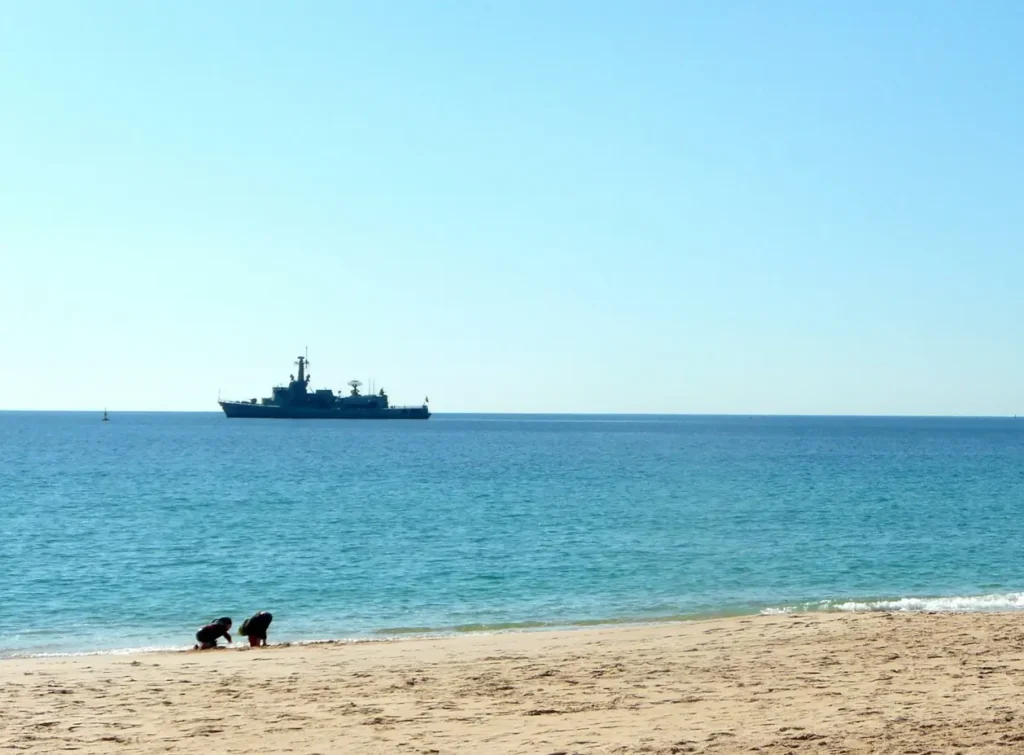
Will the Caribbean region regain its reputation as “A Zone of Peace?”
Delia Chatoor gives an update following USA Military Action in the Region.
In 2014, Latin America and the Caribbean formally declared the Caribbean Region and the Caribbean Sea as constituting a Zone of Peace. This was done by members of the Community of Latin American and Caribbean States (CELAC) to ensure security and non-aggression and, as far as possible, to facilitate peace within the Region, to resist being drawn into extra-regional conflicts, uphold International Law and, so preserve the Caribbean as a space of peace and stability.
This action is closely linked to the establishment of the Region as a nuclear-weapon-free zone through the Treaty of Tlatelolco in 1967.The Treaty, the first of its kind, prohibits the testing, use, manufacture, or acquisition of nuclear weapons in the Region and promote regional security and peaceful nuclear energy. The Treaty could also be seen as a response to the 1962 Cuban Missile Crisis.
This peace was shattered after a series of USA strikes in the Caribbean Sea and the Eastern Pacific Ocean against alleged narco-trafficking. There was also a gradual build-up of naval assets with the first strike against such traffickers taking place on September 02, 2025.Despite queries from USA members of the Houses of Representative, international and regional bodies and civil society on the veracity of the claims of illegal activities and the identification of the victims, there were no credible explanations from the USA Administration.
Tensions came to a peak when, in the early hours of January 03,2026, US Special Forces captured Nicolas Maduro and his wife Cilia Flores, at their residence in Caracas. In an immediate response, President Trump declared that the USA would “run the country” until a “judicious transition” takes place. The Venezuelan Supreme Court then directed that the Vice President, Delcy Rodriguez, assume the power and duties of the country’s president.
It is interesting to note that following the series of attacks and the detention of Maduro, there was an apparent lull in the destruction of alleged narco-trafficking boats. But reports emerged that on February 13, 2026, the USA had carried out a new set of attacks with one stating that 111 persons had so far been killed in three strikes on alleged narco-running boats.
Even as the legality of these strikes continues to be hotly debated, the USA Administration has rejected the arguments on their illegality, stating that the alleged victims were “narco-terrorists”. Under USA Law, it was further advanced that there was the right to “pre-empt any action from any state or entity which could have an impact on [USA] national security interests, posing an imminent threat”.
Experts have, however, debunked the arguments pointing out that there was an absence of respect for accepted human rights norms as well as behaviour which could amount to breaches of International Humanitarian Law (IHL). This has led to two affected families from Trinidad and Tobago filing in the US District Court for the District of Massachusetts on January 22, 2026, an action against the USA on its unlawful activities which led to the deaths of two men.
In December 2025 the family of a Colombian man who was killed in one strike had taken their issue to the Inter-American Commission on Human Rights.
How will the two judicial bodies address the claims and what action, if any, will the USA take? It is worth recalling that from the first strike the United Nations High Commissioner for Human Rights (UNHCHR), the UN itself and other international and regional bodies condemned these actions. Civil society, including tertiary institutions, were and continue to be at the vanguard of articulating their opposition over any continued action. The UNHCHR Commissioner went so far as to say that there was “no justification in international law” for the attacks, urging the USA to cease such operations and “take measures to prevent the extrajudicial killing of people aboard these boats, whatever the criminal conduct alleged against them”.
These fundamental rights are enshrined in the Universal Declaration of Human Rights but the response of the USA continues to be based on the argument that all such operations are part of its continued efforts to combat drug trafficking and terrorism and so fall within the ambit of IHL.
Even with the somewhat reduction in regional tension, the USA Administration is now seeking to address its relations with Cuba with the adoption of policies aimed at further stifling the country through the imposition of tariffs against any state seeking to provide Cuba with much-needed oil supplies. This has become critical with the curtailment of supplies from Venezuela, which was its main supplier. The removal of Maduro has had a negative impact, adding to the heightened socio-economic challenges confronting Cuba. This compounds the impact of the already harsh realities of the USA embargo against Cuba – a country now on the verge of collapse with little or no oil supplies readily available.
In January, the Catholic Bishops of Cuba voiced “deep concern over the worsening social, economic, and human situation in the country.” In early February 2026, the Government of Mexico sent humanitarian aid to alleviate Cuba’s crisis. On February 12, 2026, the Secretary of Foreign Relations of Mexico said that the aid, provided under the control of the Church, had arrived in Cuba and included essential food items and powdered milk.
There is no doubt that for the foreseeable future, there will be no ease in the tensions in the Caribbean Region with this significant attention now being directed by the USA to Cuba. This may be increased with the possible greater involvement of Russia. Earlier in February, Cuba’s media reported that Russia was “evaluating various energy support options for the island following the deteriorating humanitarian situation caused by a lack of fuel”.
The only way to address regional tensions, the unstable political situation in Venezuela and now the unfolding humanitarian crisis in Cuba, must be through the recognition of the Region as indeed “a zone of peace” and for “just, sustainable, and peaceful relations among states.”
Narrow, self-seeking, self-serving and unrealistic domestic policies devoid of concern for universal development, harmony, and the right to enjoy life, cannot be allowed to flourish and must be rejected.
Photo by Hugo Oliveira on Unsplash